



If you're missing most or all of your teeth, or facing the loss of what's left, a full-arch fixed dental bridge is a long-term solution. Also called All-on-X, a fixed dental bridge replaces a complete arch with a set of teeth anchored permanently to four or six dental implants.
Standard dentures are held in place by suction or adhesive, so they can slip and shift when you eat and talk. A fixed implant bridge doesn't. It's secured to implants in your jaw, and only your dentist can remove it. So, you brush the fixed bridge in your mouth, eat what you want, and never think about adhesive again. For most patients, a fixed dental bridge is the closest thing to having natural teeth back.
If you'd rather have teeth you can take out at night, implant-supported dentures use fewer implants and cost less, while still snapping securely into place.
How a fixed implant bridge works
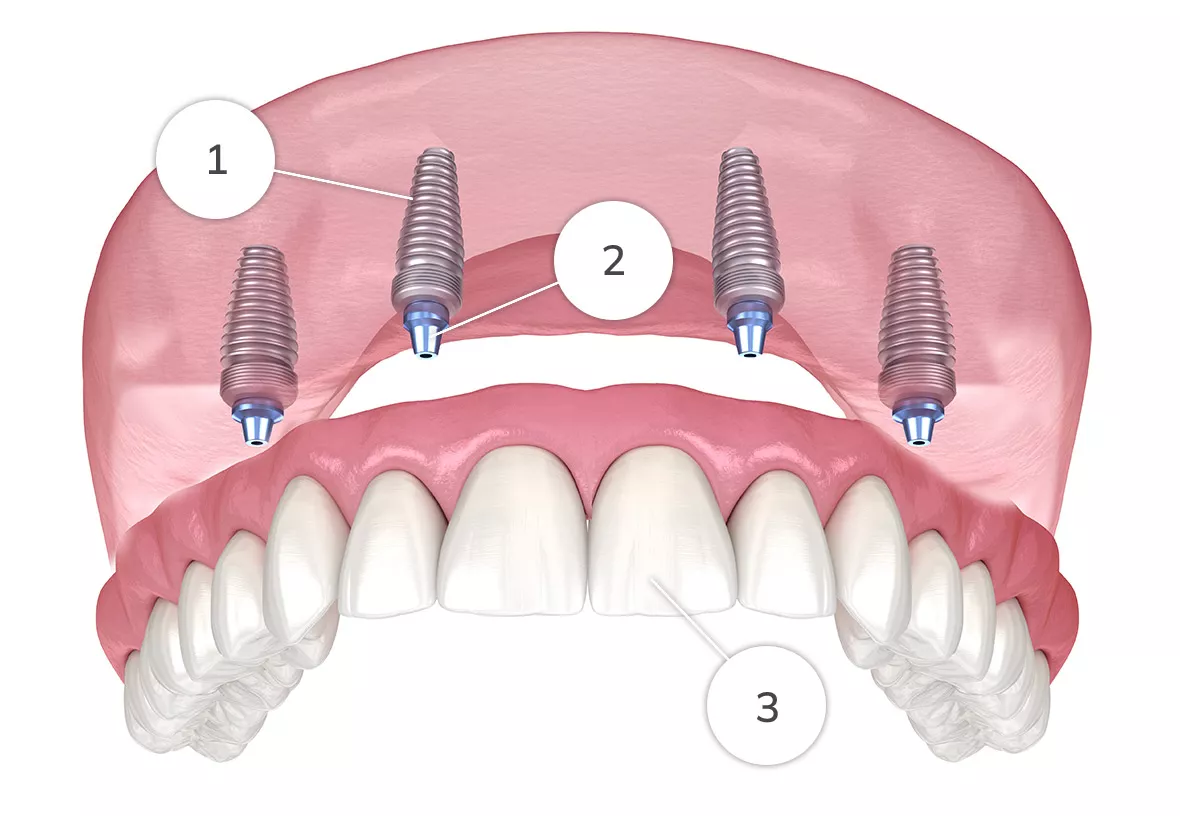
1 Titanium implant
These strong titanium posts (usually four or six per jaw) are implanted in spots specifically chosen to maximize denture support.
2 Abutments
The abutments permanently attach to the implants and provide attachment points for the denture.
3 Bridge
Custom-designed bridges securely attach to the abutments. The bridges are permanently attached by Dr. Touchstone.
The steps in a fixed implant bridge procedure
Your fixed implant bridge (hybrid) treatment is an in-office procedure that's conducted in stages-not all of which will apply to all people. Adequate time between stages is important. At Touchstone Dentistry, our custom tailored techniques are designed to improve long term outcomes by measuring the stability of your implants scientifically and customizing the pace of your treatment accordingly.
- Consultation: This is your chance to ask any questions you might have, and the doctor's opportunity to learn more about your needs and make an informed recommendation for treatment. We will create a customized plan at our Hattiesburg office that ensures that you do never go without teeth from the start of your care onward.
- Preparation: For those who need it, we'll remove damaged or unhealthy teeth and/or perform a grafting procedure to create a more suitable implant site.
- Placement of the dental implants: After using our Cone Beam CT scanner to find exactly the right spots in your jaw, we place the implants in a simple surgical procedure. Usually four or more per jaw. This step is often performed at the same time as step 2 above.
- Placement of abutments: The timeframe for attaching the abutments will be determined by measuring biological stability scientifically. This measurement is called an "Osstell ISQ value".
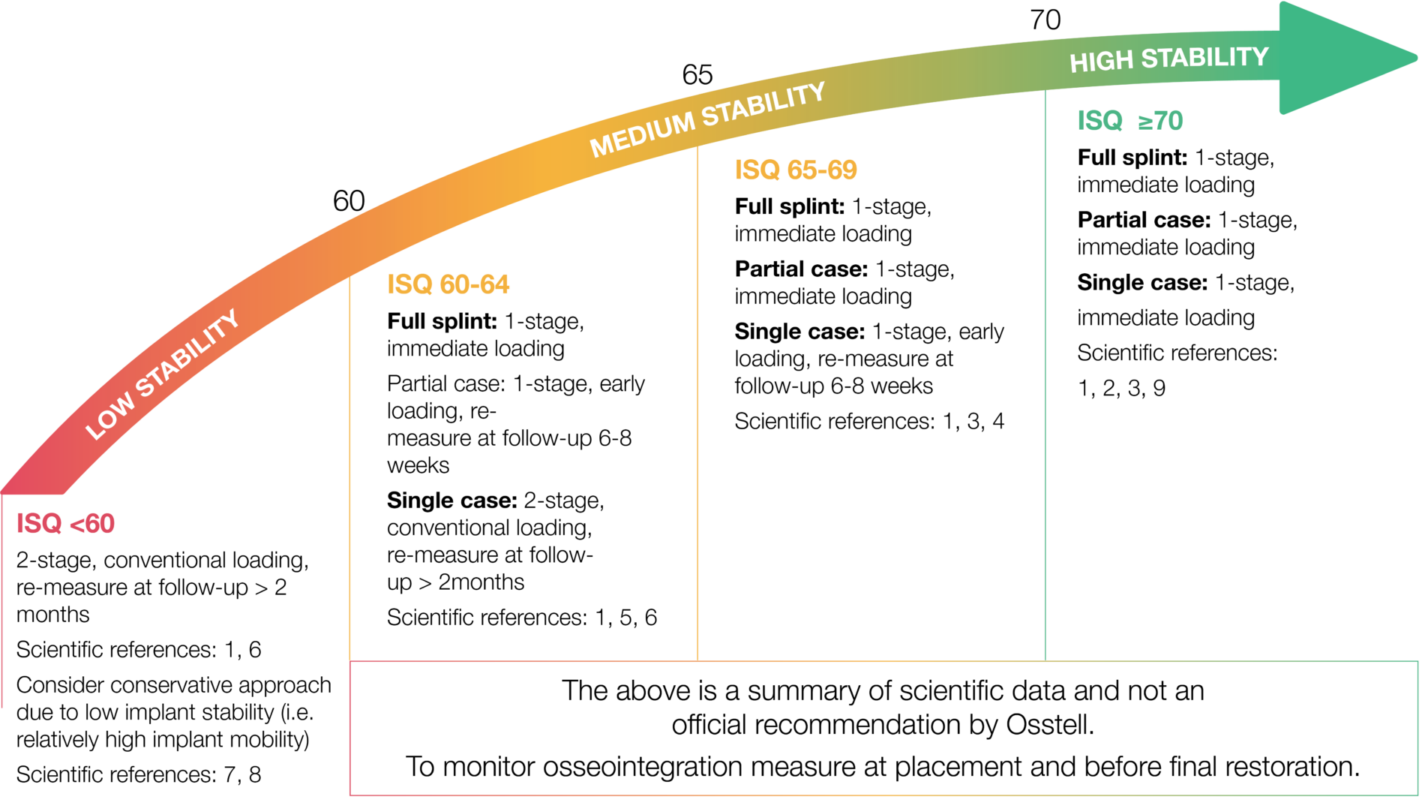
- Placement of implant supported bridges: New bridges, designed to fit your mouth perfectly, are inserted and permanently attached to the abutments. Your new fixed implant bridges are now complete!
The benefits of your new fixed implant bridges
- Restored bite force: Since your new bridges are securely attached, your power to chew will match that of natural teeth.
- More natural speech: Since the bridges won't shift or move, you'll be able to speak normally and with confidence.
- Implants can last a lifetime: Titanium dental implants are very strong, and with proper oral care can last many decades or more.
Book a Consultation
If you would like to book an appointment with Touchstone Dentistry, or if you have any questions at all, please feel free to reach out and one of our team members will be in touch.
Related Videos
Frequently Asked Questions
It depends on your jaw, not on a standard package. Four implants placed at carefully chosen angles can support a full arch for most patients, and it's often the right choice for the lower jaw, where bone tends to be denser. The upper jaw is softer and takes more of the load from chewing, so six implants are frequently the better option there. Bone volume, bite force, and whether you grind your teeth all factor in. We take a 3D scan of your jaw at your consultation and decide the number from what we actually see, then explain why we're recommending it.
For most of our patients, yes. We remove the remaining teeth, place the implants, and fit a temporary bridge or prototype denture in a single visit, so you leave with a full set of teeth the same day you came in. Once healing is complete, you can be fitted with your permanent denture.
No, though the two are often confused. A fixed implant bridge is permanently attached to your implants, only your dentist can remove it. Which also means that you clean it in your mouth like natural teeth. Implant-supported dentures snap onto the implants and you take them out at night to clean them. Fixed bridges feel closest to natural teeth and need the most implants; removable dentures cost less and need fewer implants. We'll talk through both options during your consultation so you can weigh the trade-offs yourself.
The two common choices are acrylic teeth set on a titanium frame, and solid zirconia. Acrylic is lighter and less expensive, and individual teeth can be repaired if one chips, though the material wears gradually over the years. Zirconia is considerably harder and more stain-resistant, holds its appearance longer, and costs more. Neither is the right answer for everyone. It depends on your bite, your budget, and how much wear you're likely to put on it.
We offer a lifetime guarantee on all zirconia implant bridges, zirconia crowns and premium dentures,* so your new smile is built to last.
*Subject to limitations that will be defined in detail during the treatment planning process.
You brush it like natural teeth, twice a day. The difference is underneath: because the bridge sits just above your gums rather than resting on them, you need to clean that space daily. Most patients use a water flosser along with a special floss threader, which takes a couple of extra minutes and quickly becomes routine. We'll also see you for regular hygiene visits, and periodically we'll remove the bridge to clean it thoroughly and check the implants beneath. Keeping that underside clean is the single biggest factor in how long your implants last.
Often, yes! And this is one of the reasons All-on-4 was developed. By angling the rear implants rather than placing them straight down, we can anchor into denser bone further forward in the jaw and avoid areas where bone has receded, which means many patients who were turned down for conventional implants can be treated without grafting. When grafting is needed, we can do that here as well. A 3D scan at your consultation will tell us exactly what we're working with.
Medically reviewed by Dr. Alex Touchstone, November, 2026.