



A single tooth implant offers a permanent, natural-looking way to replace a missing tooth. Implants help to preserve bone, prevent bone loss and restore the look and function of your smile.
We use precision technology to place dental implants with surgical guides designed for every patient. The implant itself is a titanium post that acts as a root anchoring it securely into the jawbone. Once the implant has healed, a custom-made crown is attached to the implant restoring the function of your teeth.
How single tooth implants work
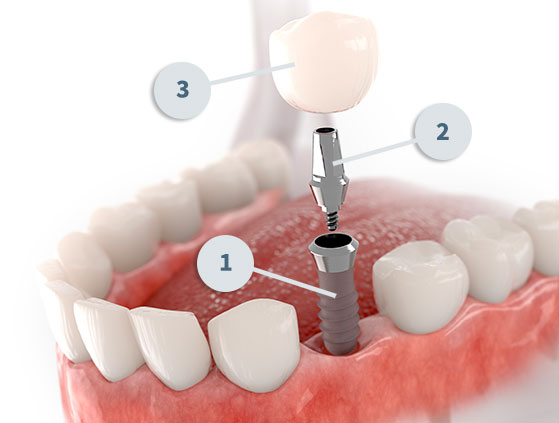
1 Implant placement
To begin, we choose the ideal location that will provide the most support for the implant, and then we place it in a surgical procedure.
2 Attach abutment
Once the implant is permanently in place, we attach a device called an abutment that will provide support for a dental crown.
3 Fit and place crown
After the abutment has been placed, we design a dental crown that matches your other teeth and permanently attach it to the implant.
Why choose a single tooth implant?
- Looks and feels like a natural tooth
- Preserves bone and prevents bone loss
- Restores biting strength
- Easy to care for
Book a consultation
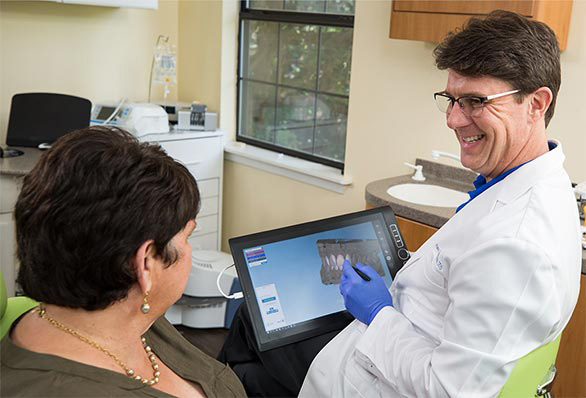
If you would like to book an appointment with Touchstone Dentistry, or if you have any questions at all, please feel free to reach out and one of our team members will be in touch.
Related Videos
Frequently Asked Questions
When a missing tooth is not replaced, the jaw bone may begin to deteriorate around the space left by the missing tooth. This may result in changes in the shape of your jaw, and it can also result in your remaining natural teeth shifting positions. Dental implants can prevent this from happening because they stimulate and preserve the healthy bone.
With good dental hygiene, regular checkups on the health of your implant, and good overall health, your implants should last for decades. The crown may wear out over time and may need to be restored or replaced, depending on your eating and dental hygiene habits.
A dental implant will look and function just like a regular tooth. The crown is made of composite material, so you will be able to feel them with your tongue, but for most of the time they should feel like natural teeth.
You care for your implant just like you would for your natural teeth, with regular brushing, flossing and professional cleaning. You can also use an interdental brush or irrigator to clean around the crown to remove any food particles.
Both options replace a missing tooth, but they work differently. A bridge sits above the gum and the replacement tooth is anchored to the two teeth on either side of the gap. An implant stands on its own, so the neighboring teeth are left untouched. An implant also replaces the tooth root, which preserves the jawbone and prevents bone loss. Bridges typically need replacing after ten to fifteen years, while an implant can last decades with good care. Bridges cost less upfront and take less time, so they're still the right answer for some patients. Dr. Touchstone or Dr. Johnson will walk you through both options at your consultation.
It depends. The jawbone begins to shrink once a tooth root is gone, and after several years there may not be enough bone left to hold an implant securely. That doesn't necessarily mean you can't get an implant but you may need a bone graft to prepare the area before a dental implant can be placed. We take digital scans at your first visit to measure exactly how much bone you have, and prepare an individualized treatment plan so you'll have all the information you need to make an informed decision.
Medically reviewed by Dr. Alex Touchstone, October, 2026.